|
|
|
 |
|
Plant of the
Month SEPTEMBER 2015 |
|
 |
|
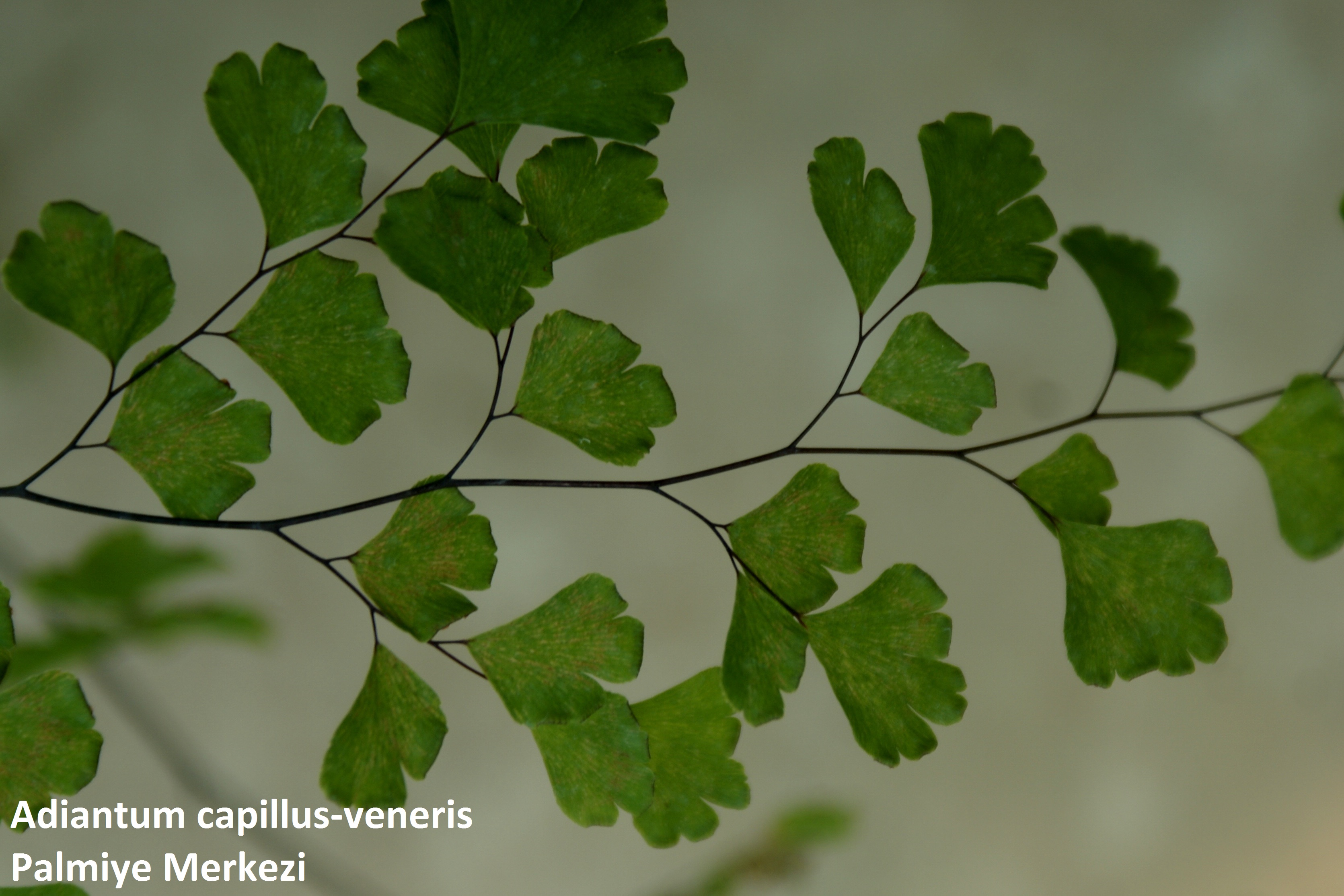
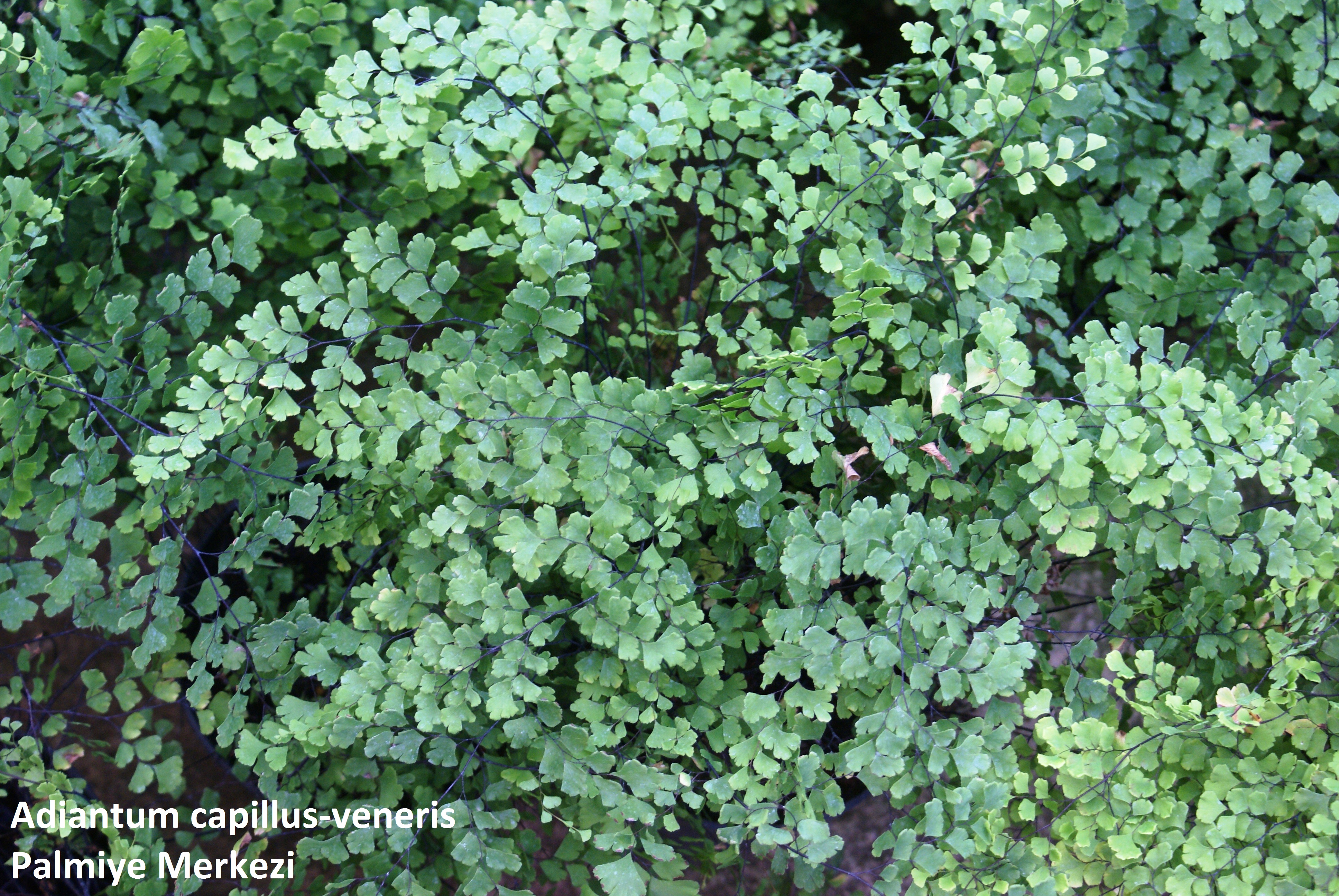
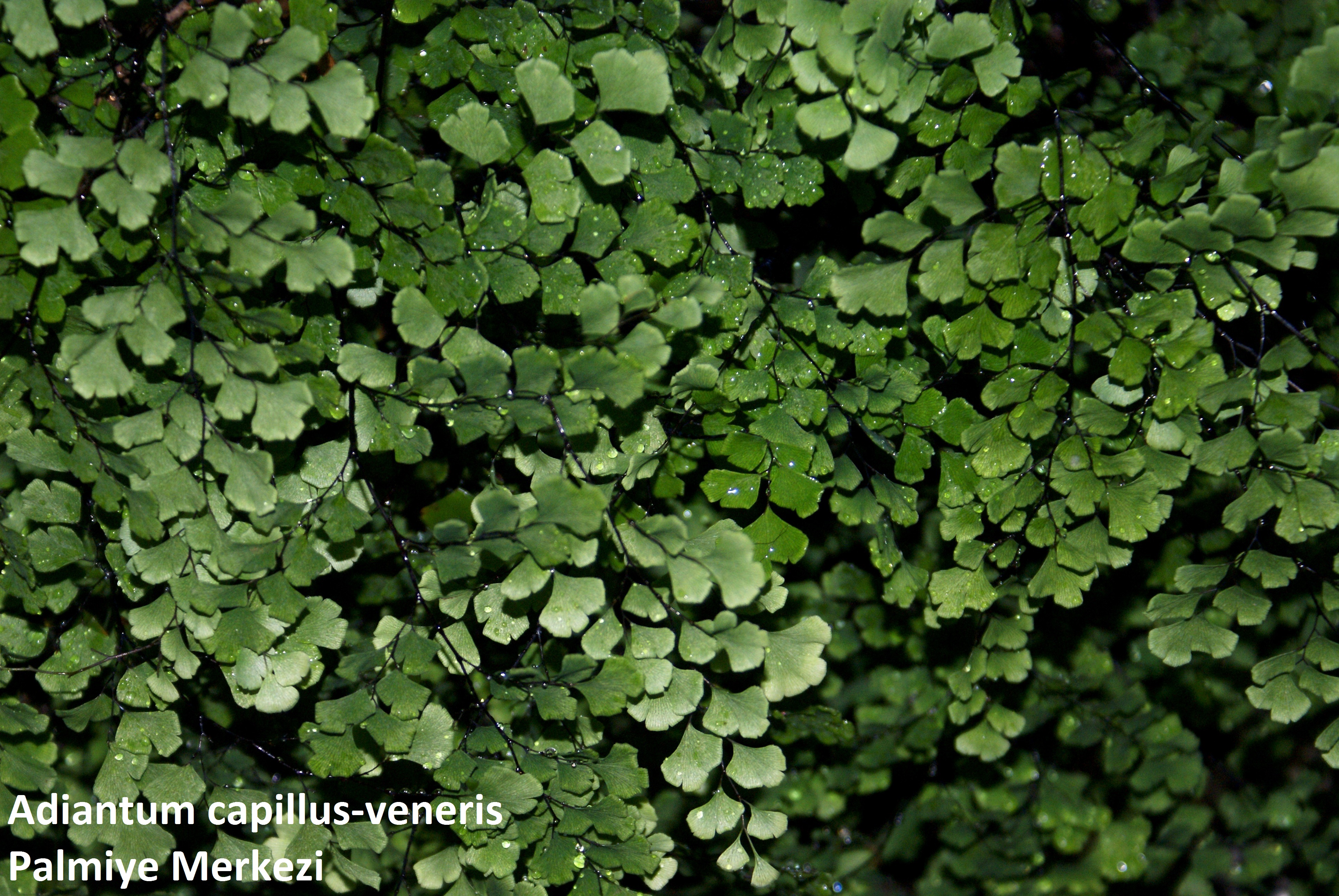
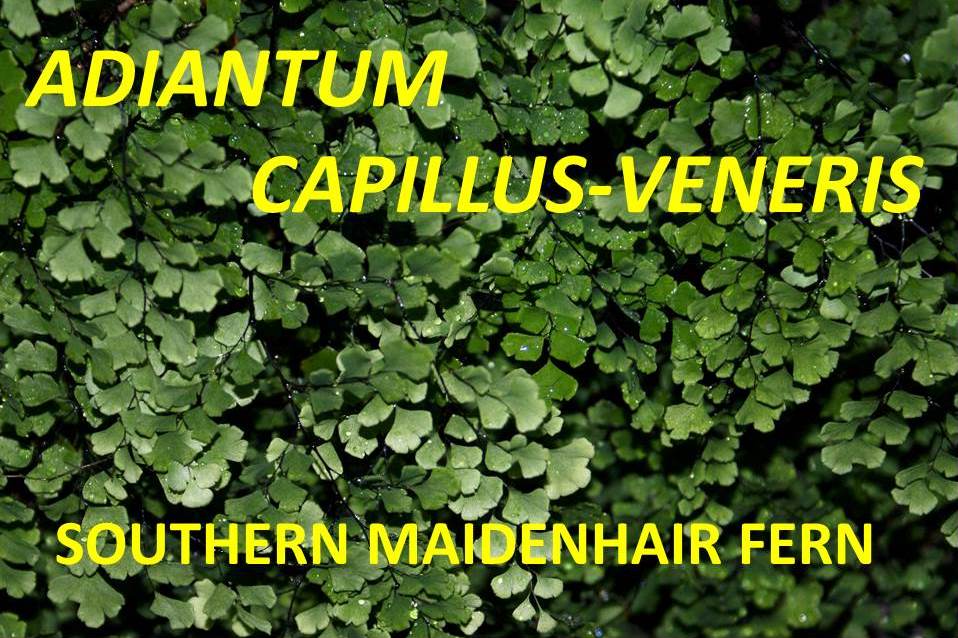
ADIANTUM CAPILLUS-VENERIS - SOUTHERN MAIDENHAIR FERN
(BLACK
MAIDENHAIR FERN - VENUS HAIR FERN)
Adiantum capillus-veneris
is
a
species of
ferns
in the genus
Adiantum
Fern
which they all are belong to Pteridaceae
Family (Syn.
Adiantum capillus, Adiantum michelii, Adiantum modestum,
Adiantum schaffneri)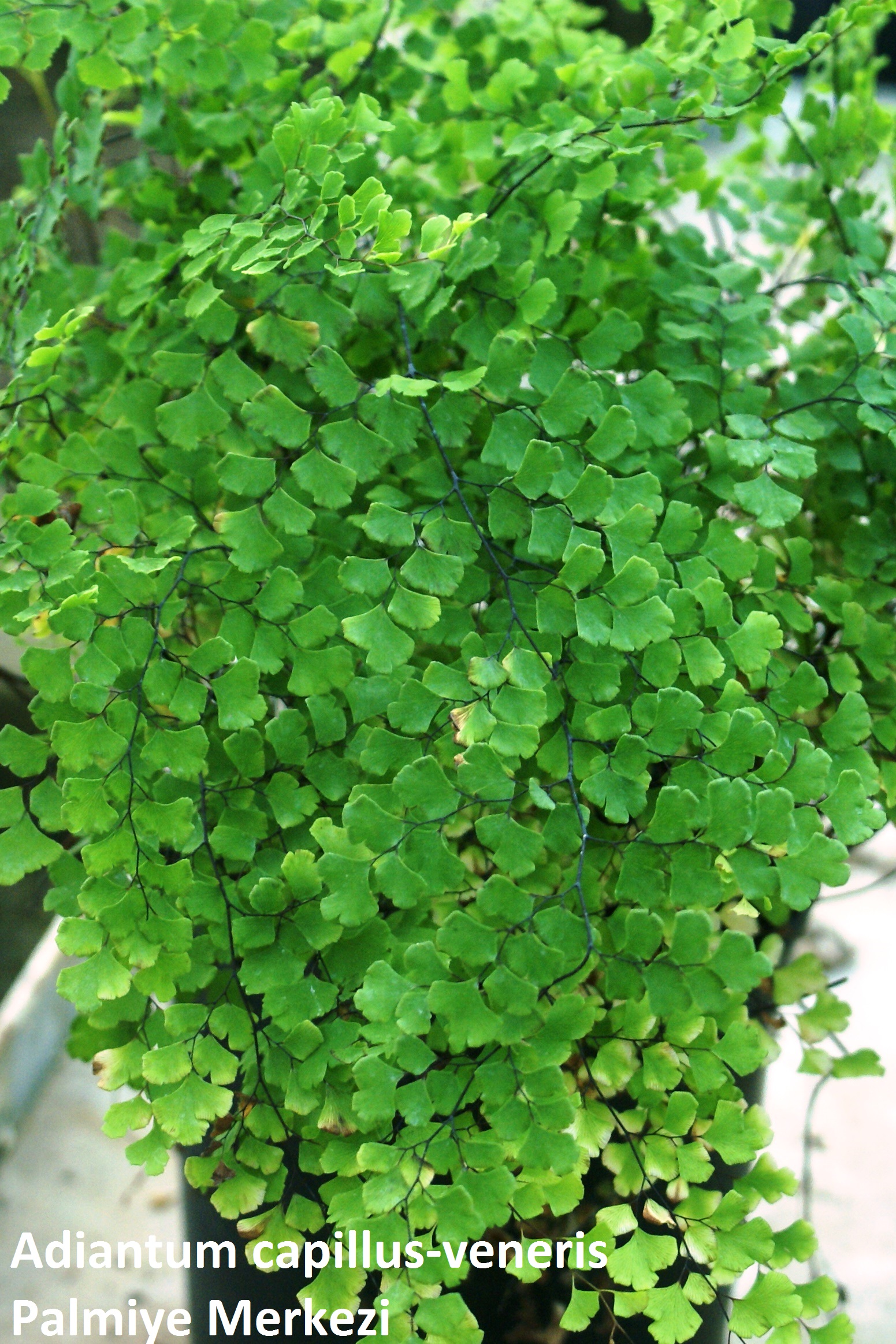
Genus name of Adiantum means unwetted because
their foliages repel water. Specific epithet comes from
Latin meaning hair “capillus” of Venus “veneris”
as reflected by the sometimes used common name of
Venus Maidenhair Fern for this species.
Adiantum capillus-veneris
is native
throughout the world in tropical to temperate regions
including North and South America, Europe, Asia, Africa
and Australia.
It can be found at the moist, well-drained sandy, loamy
or lime stones
habitats,
including rainforests.
Southern Maidenhair Fern
is a deciduous, clumping fern with a drooping habit that
grows up to 25-30 cm tall and slowly spreads by short
creeping rhizomes. It features bipinnate to tripinnate
fronds with wiry, black stems that are distinctively
arching to pendent. Small pinnae, each 5-15 mm long, are
fan shaped. Spores appear in summer on the reflexed
pinnae under margins.
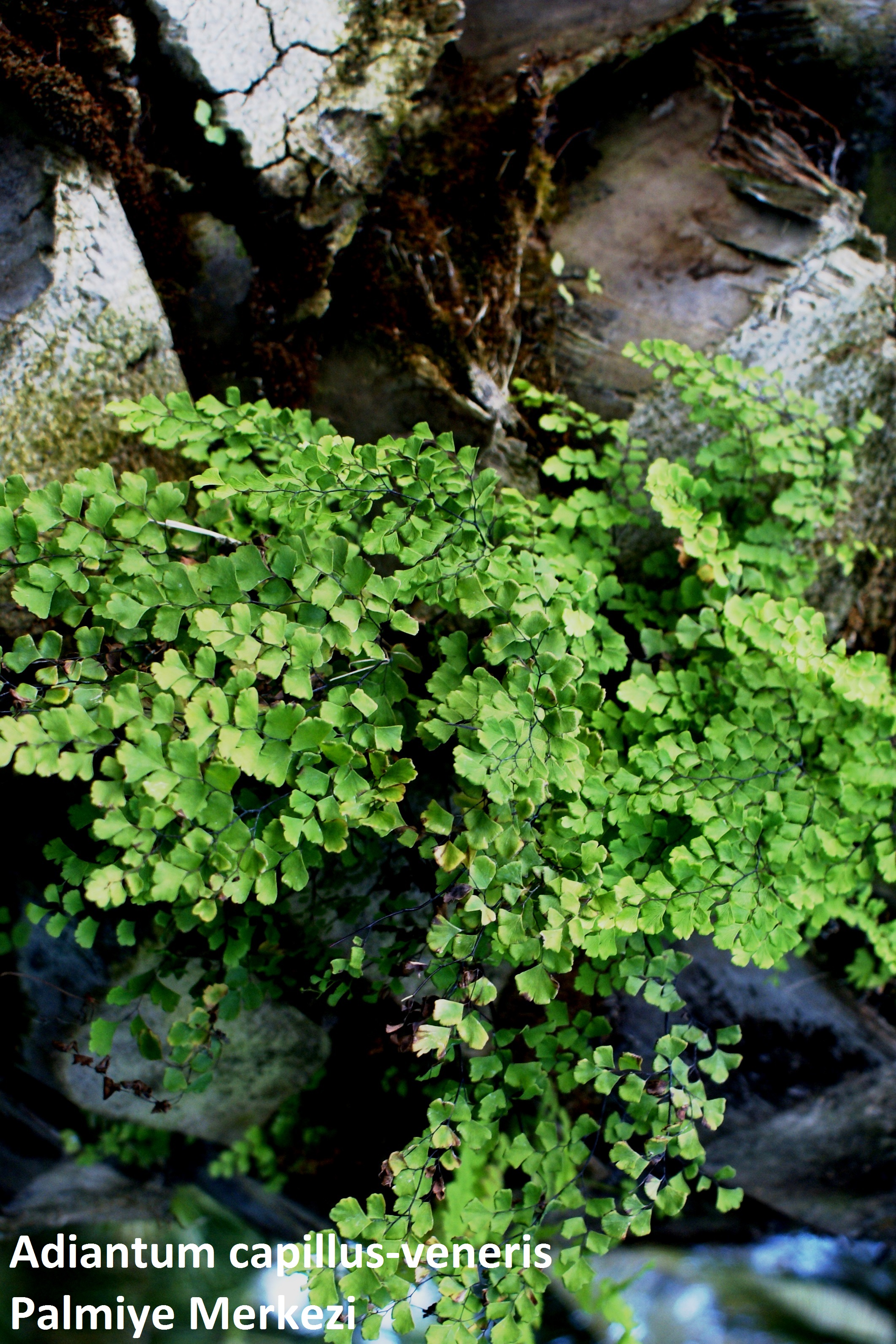
Adiantum capillus-veneris is fairly drought-tolerant, receding into summer dormancy
if it dries out. If it goes dormant, stems should be
trimmed, kept moist and placed in a shady protected spot
to encourage new growth. It withstands -25˚C.
Southern Maidenhair Fern
has a long history of medicinal use and was the main
ingredient of a popular cough syrup called 'Capillaire',
which remained in use until the nineteenth century.
This plant is used medicinally by Native Americans but
is little used in modern herbalism. The fresh or dried
leafy fronds are antidandruff, antitussive, astringent,
emetic, expectorant, galactogogue, laxative, stimulant.
Externally, it is used as a poultice on snake bites, bee
and insect stings.
Use in landscape:
Adiantum capillus-veneris
is suitable for growing outdoors in mild climates, or
indoors in colder regions.
As a popular
garden fern
and
house plant
is cultivated and widely available around the world. It
is a choice species for the woodland garden,
and traditional
shade gardens.
It is a demure plant that tends to seek shelter under or
behind other plants. Its leaves are delicate and fan-shaped,
creating a lacy effect. Also
commonly used as an indoor
houseplant. |
|
|
|
|
|
Plant of the
Month August 2015 |
|
 |
|
BIGNONIA
CAPREOLATA
-
CROSSVINE
Bignonia capreolata
is an
evergreen
vine
commonly referred to as Crossvine. It is belong
to
Bignoniaceae
family, Bignonia genus.
Family name honors Jean P. Bignon, librarian in the
court of King Louis XV.
The species name
capreolata, means having tendrils. The common name
Crossvine
refers to
cross-shaped pattern revealed when the stem is cut
(synonyms: Doxantha capreolata, Anisostichus
capreolata, Anisostichus crucigera).
Bignonia
capreolata
is native to southeastern USA, from Maryland to Florida,
and west to Missouri and Texas.
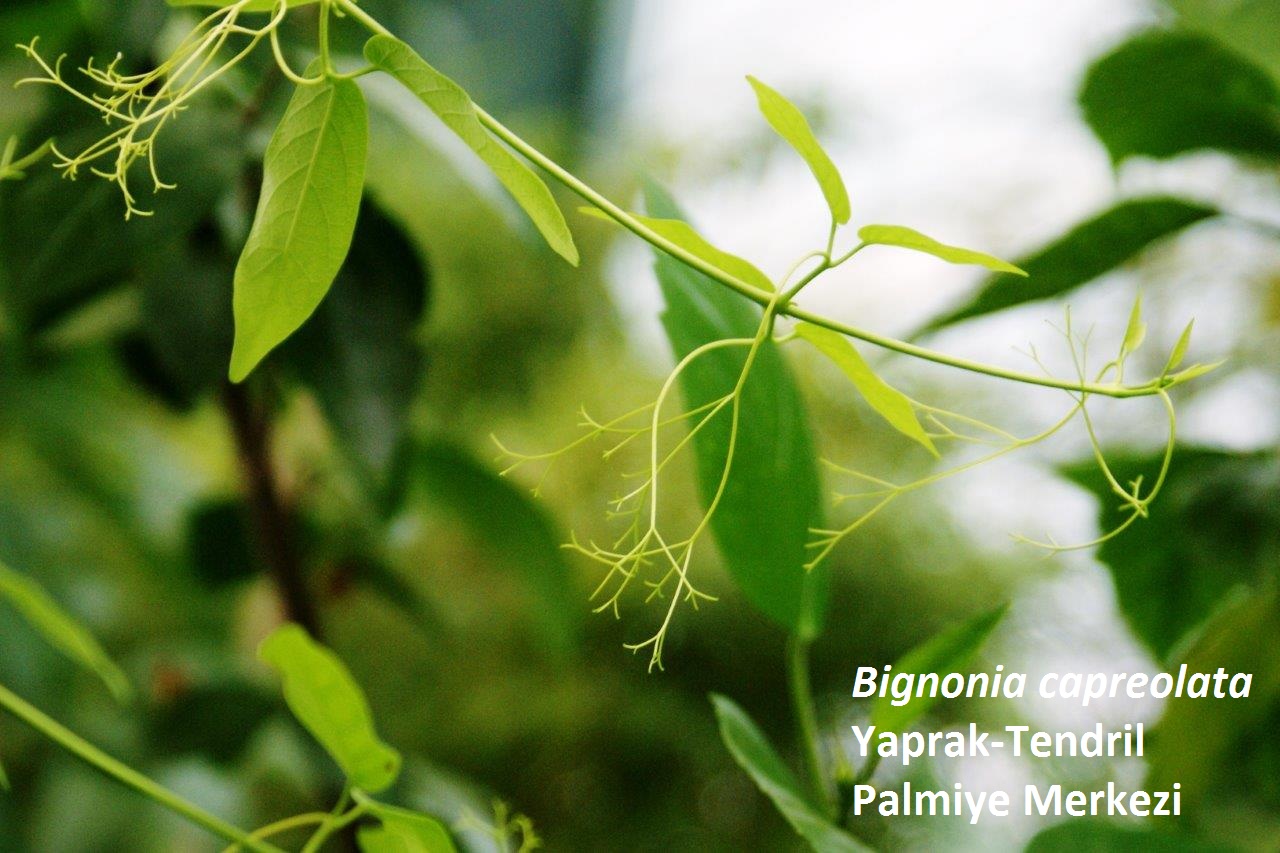
Its opposite,
compound leaves
are
bifoliate,
usually 10-15 cm long and 5 cm wide. Leaves are glossy
dark green in summer and reddish after frost.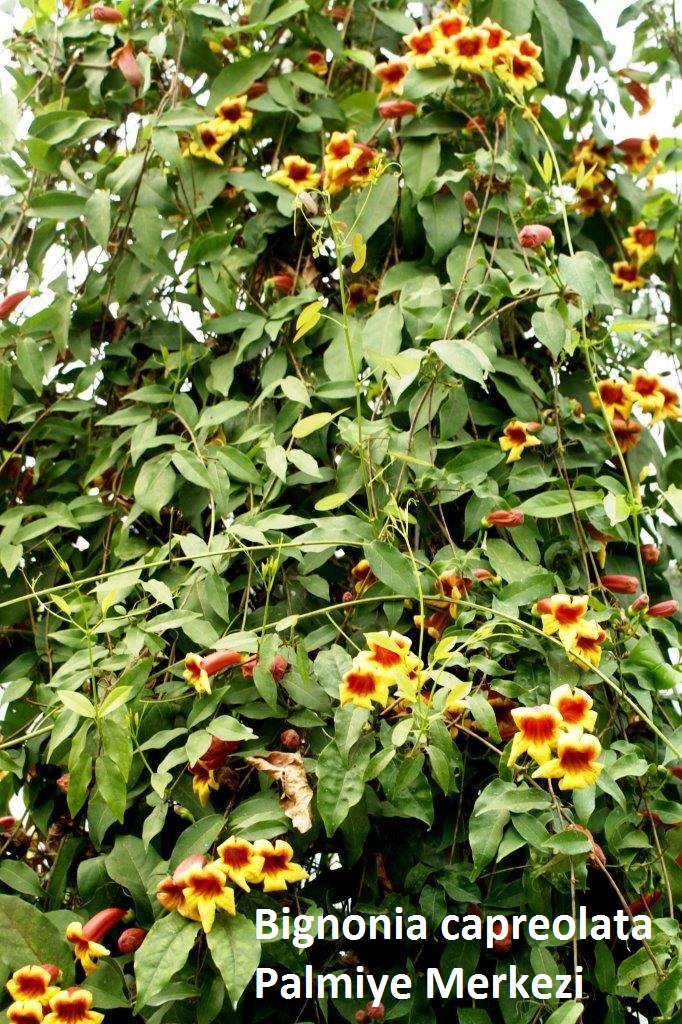 Each
leaf consists of a pair of lanceolate to oblong dark
green leaflets and a branched tendril between them.
In areas with mild winters
Crossvine
will keep its leaves during the winter. Unlike its
cousin the Trumpet Creeper (Bignonia radicans or
Campsis radicans), it climbs using tendrils,
rather than the aerial roots that can sometimes harm a
structure.
Each
leaf consists of a pair of lanceolate to oblong dark
green leaflets and a branched tendril between them.
In areas with mild winters
Crossvine
will keep its leaves during the winter. Unlike its
cousin the Trumpet Creeper (Bignonia radicans or
Campsis radicans), it climbs using tendrils,
rather than the aerial roots that can sometimes harm a
structure.
Bignonia
capreolata
produces
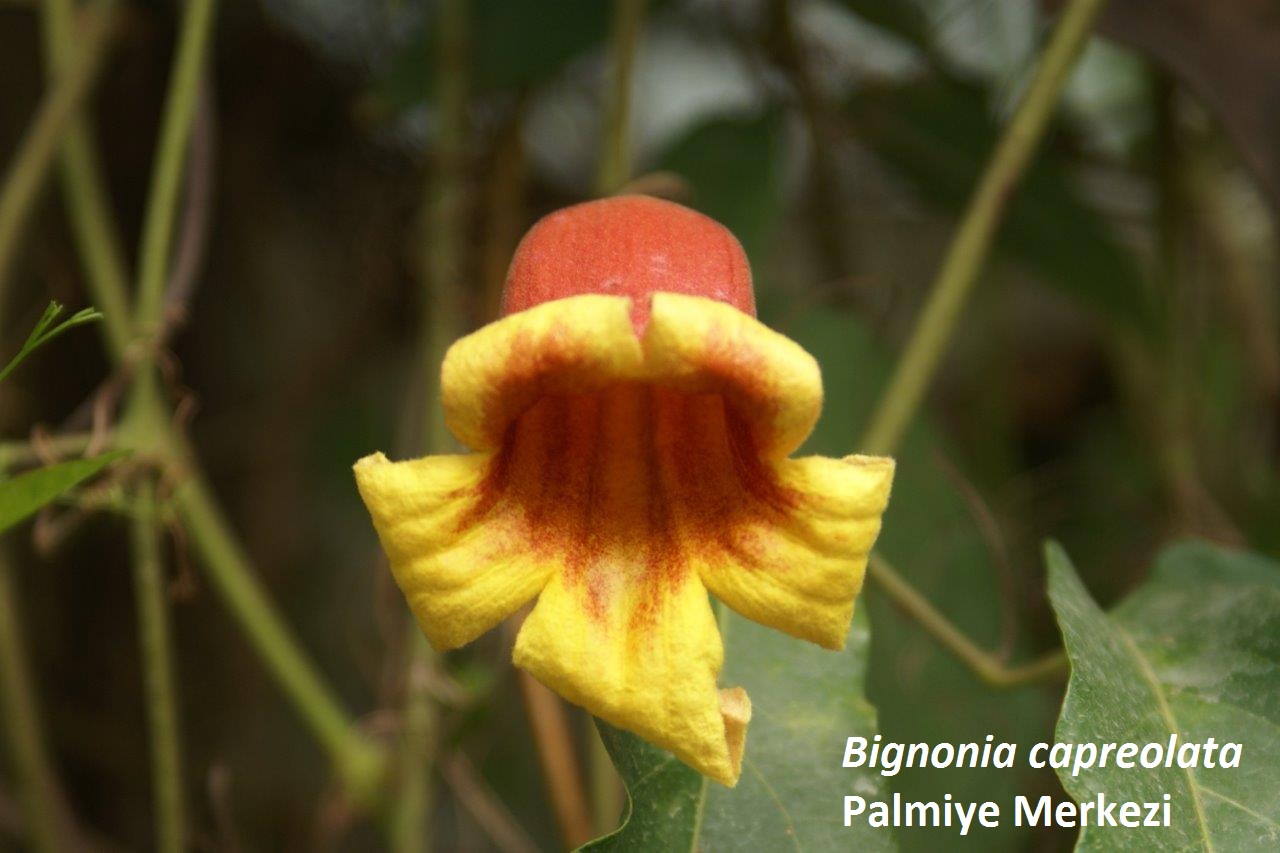
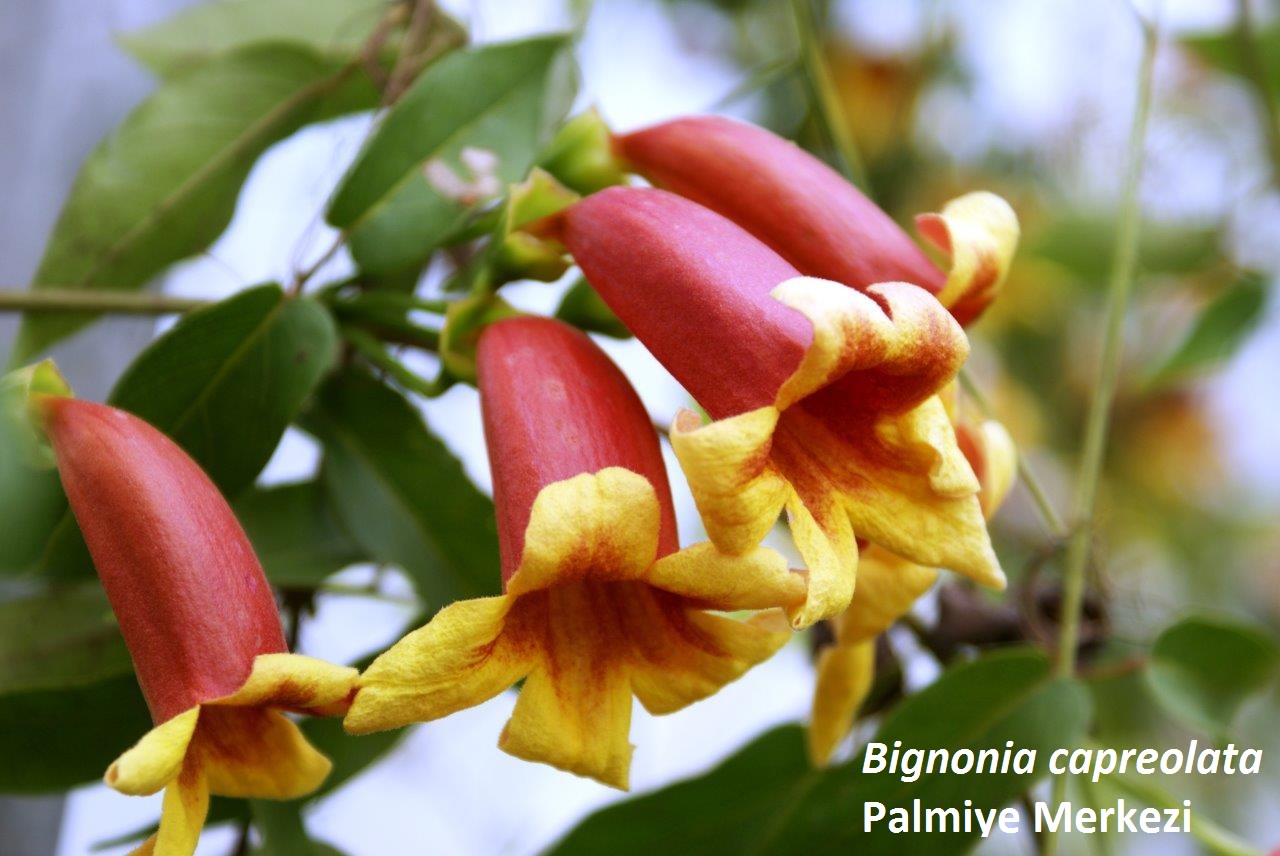
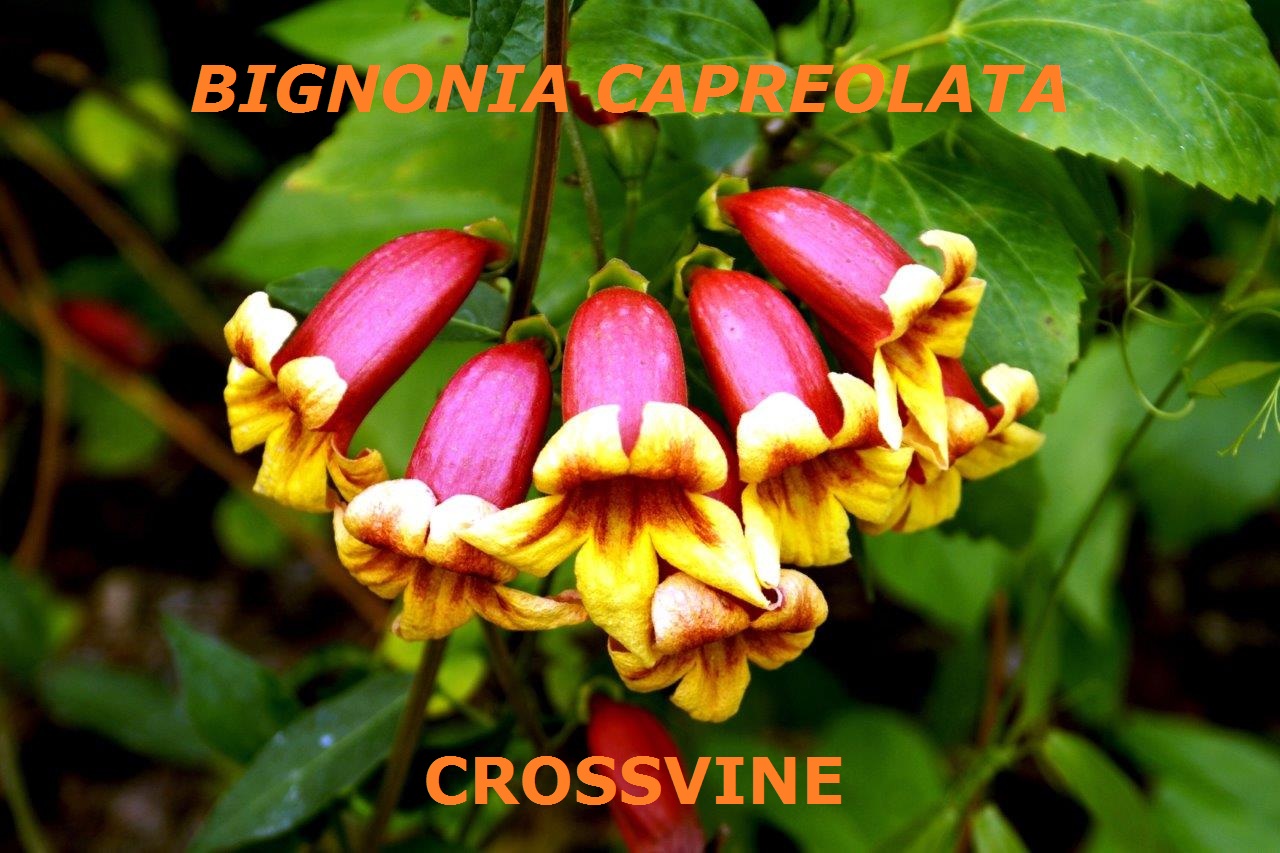
flowers appear in late winter and early spring.
Long tubular
showy
flowers
are usually
red on the outside, with a yellow interior
and frequently have a
mocha
fragrance. Flowers are
5-7 cm long and borne
in clusters of 2-5. The fruits are flattened pod-like
pendants 12-20 cm long.
Crossvine
tolerates poor soil and dry conditions. If planted in
shade, it will scramble up any available structure or
tree to find sunlight.
They often
climb very high, with leaves only remaining on the
uppermost portion of the plant. It
is hardy to -24˚C.
Bignonia
capreolata
reproduces by seeds or by shoots sprouting from the base
of the plant. It is commercially available in several
selections, but many beautiful variations have been
discovered in the woods and brought into gardens.
There are some
cultivars of this species which have colors other than
the maroon-orange of the wild plant.
The varieties often seen include atrosanguinea (dark red)
in color, Tangerine Beauty a blend of apricot and golden
rust color, Helen Fredel a more yellow specimen.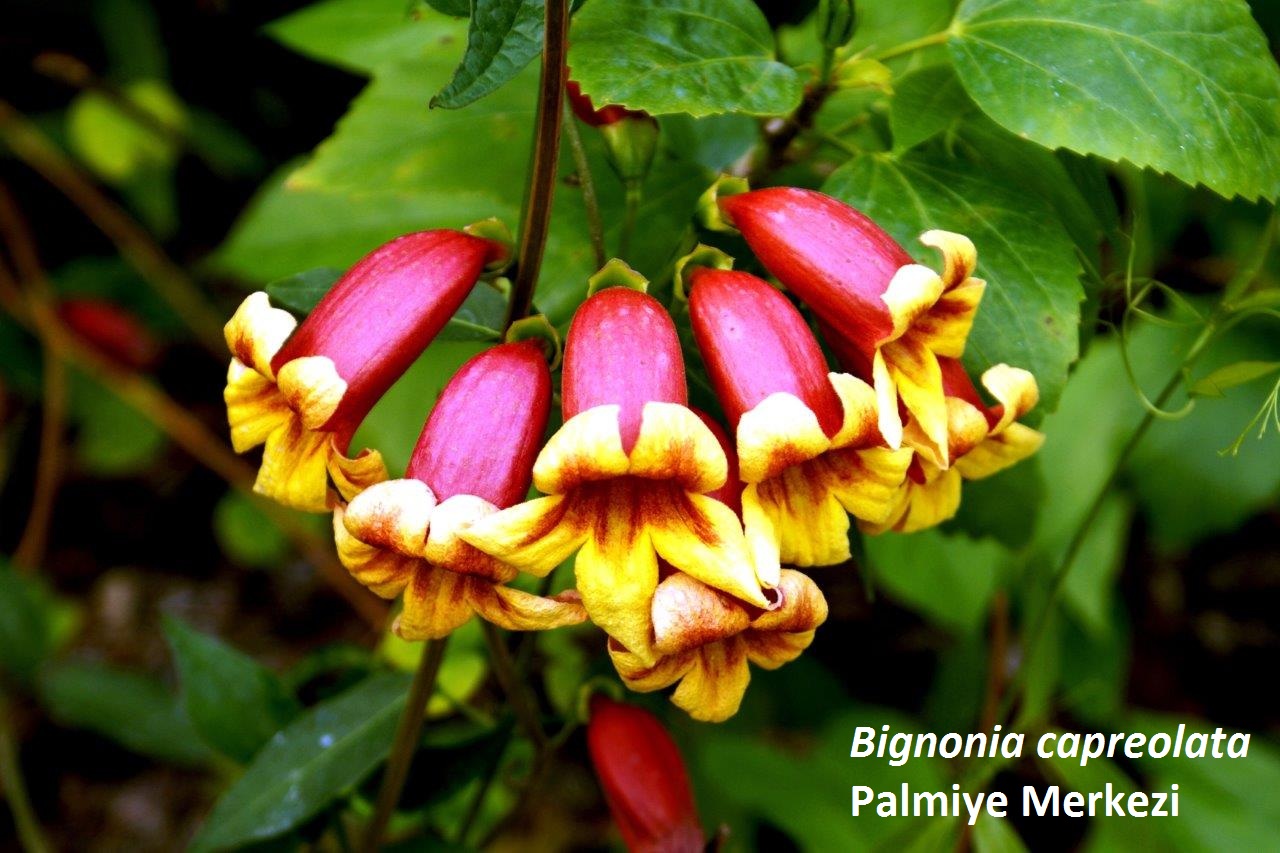
The native Americans
used
Crossvine
as a remedy for a number of physical conditions,
including diphtheria, edema, headaches and rheumatism.
In
2012, an indole alkaloid
reserpine
was found in
Bignonia capreolata.
Reserpine
is an
antipsychotic
and
antihypertensive
drug that has been used for the control of
high blood pressure
and for the relief of
psychotic
symptoms,
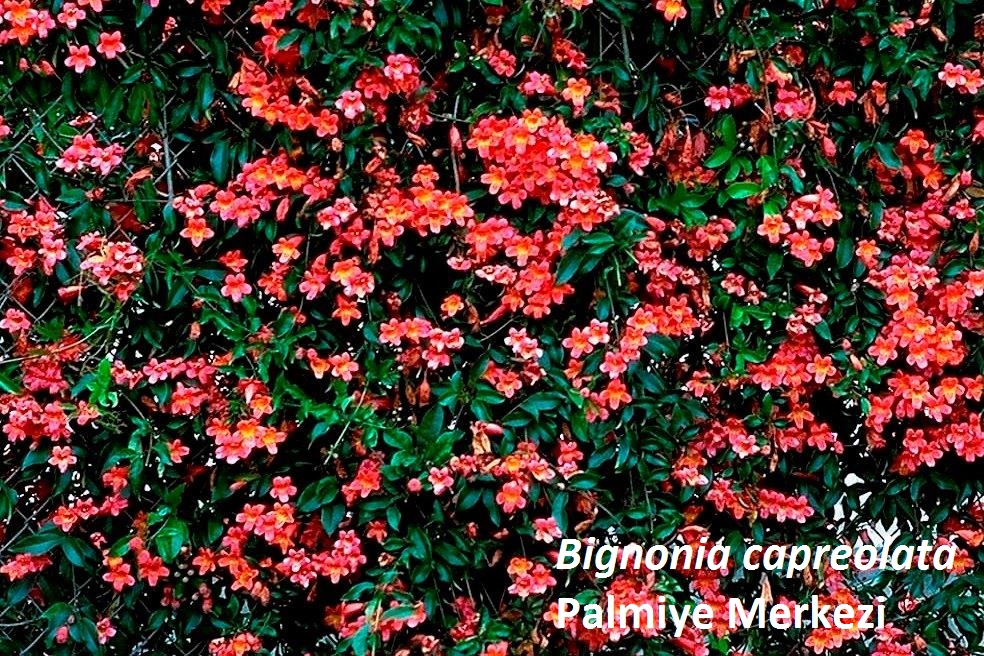
Use in Landscape:
As a vine, it is commonly
used cover for fences, arbors, walls, pillars or large
trellises. |
|
|
|
Plant of the
Month JUly 2015 |
|
 |
|
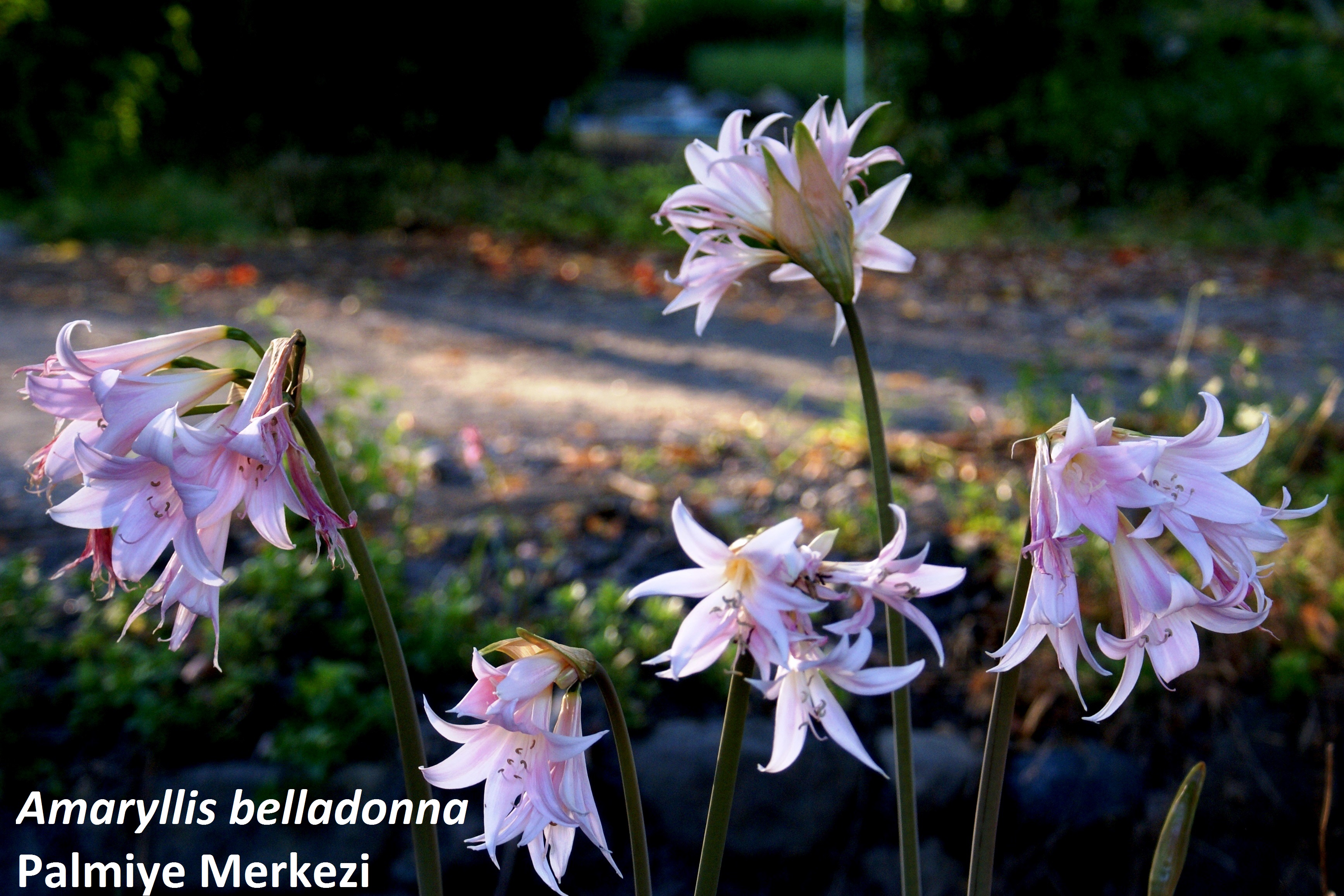
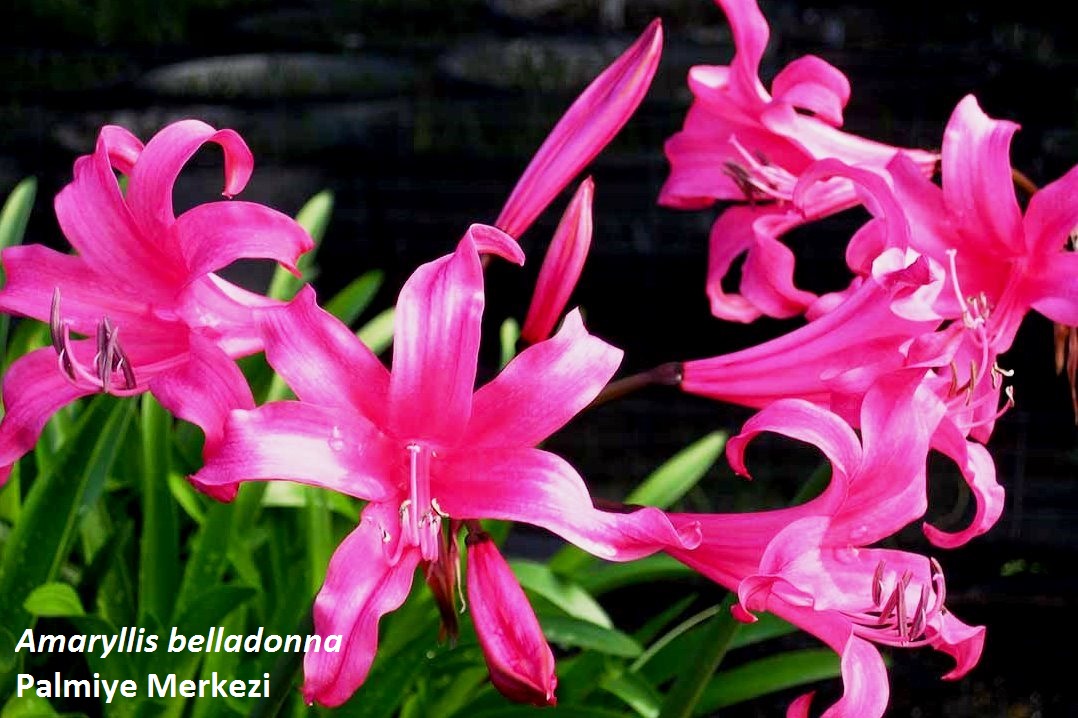
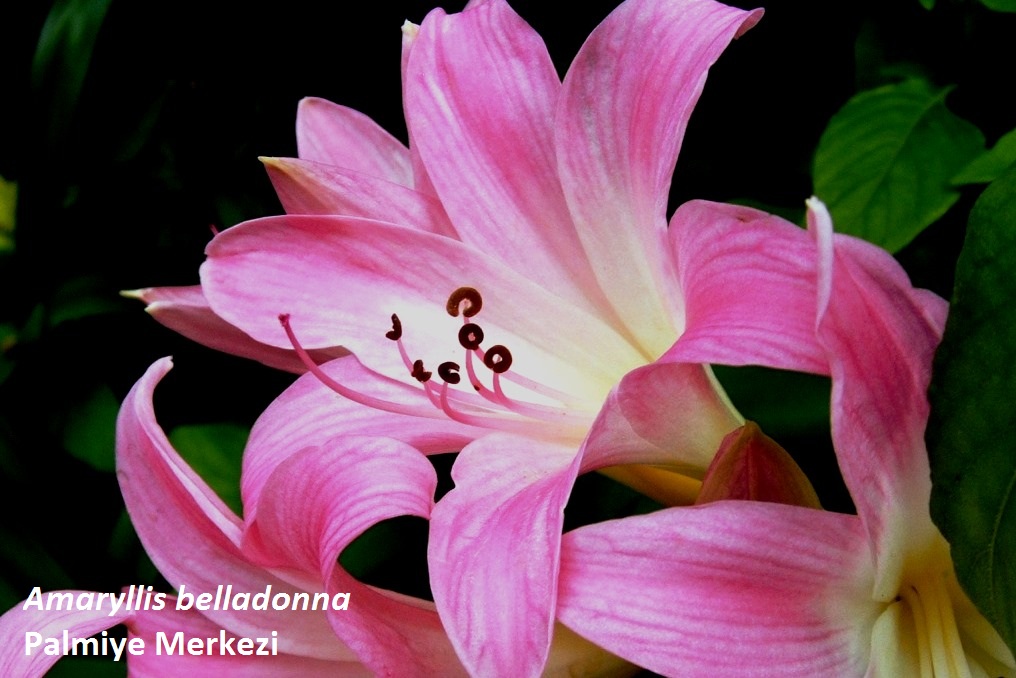
AMARYLLIS
BELLADONNA
- BELLADONNA LILY
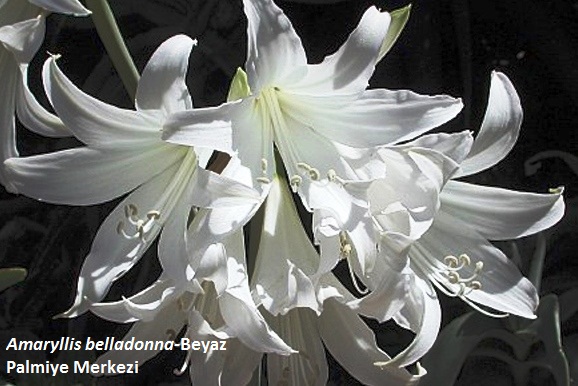
Amaryllis is a monotypic (only one species) genus
containing Amaryllis belladonna. The
Belladonna Lily is a native of South Africa. It is
often confused with the Hippeastrum which is
generally known as Amaryllis.
Hippeastrum
is a genus composed of several species in contrast to
Amaryllis which contain only one species.
Hippeastrum genus is belong to South America, has
4-6 large flowers on a hollow stem, while
Amaryllis belladonna has 2-12 smaller flowers on
a solid stem. The name
Amaryllis comes from "Amarella" for the bitterness
of the bulb or ‘sparkling’ a
beautiful shepherdess in Greek mythology.
The specific epithet
Belladonna means beautiful lady. Belladonna Lily
is referred to as Naked Lady in the United
States, and the Madonna Lily in Italy.
The common name “Naked
Lady” comes from the plant's
pattern of flowering when the foliage has died down.
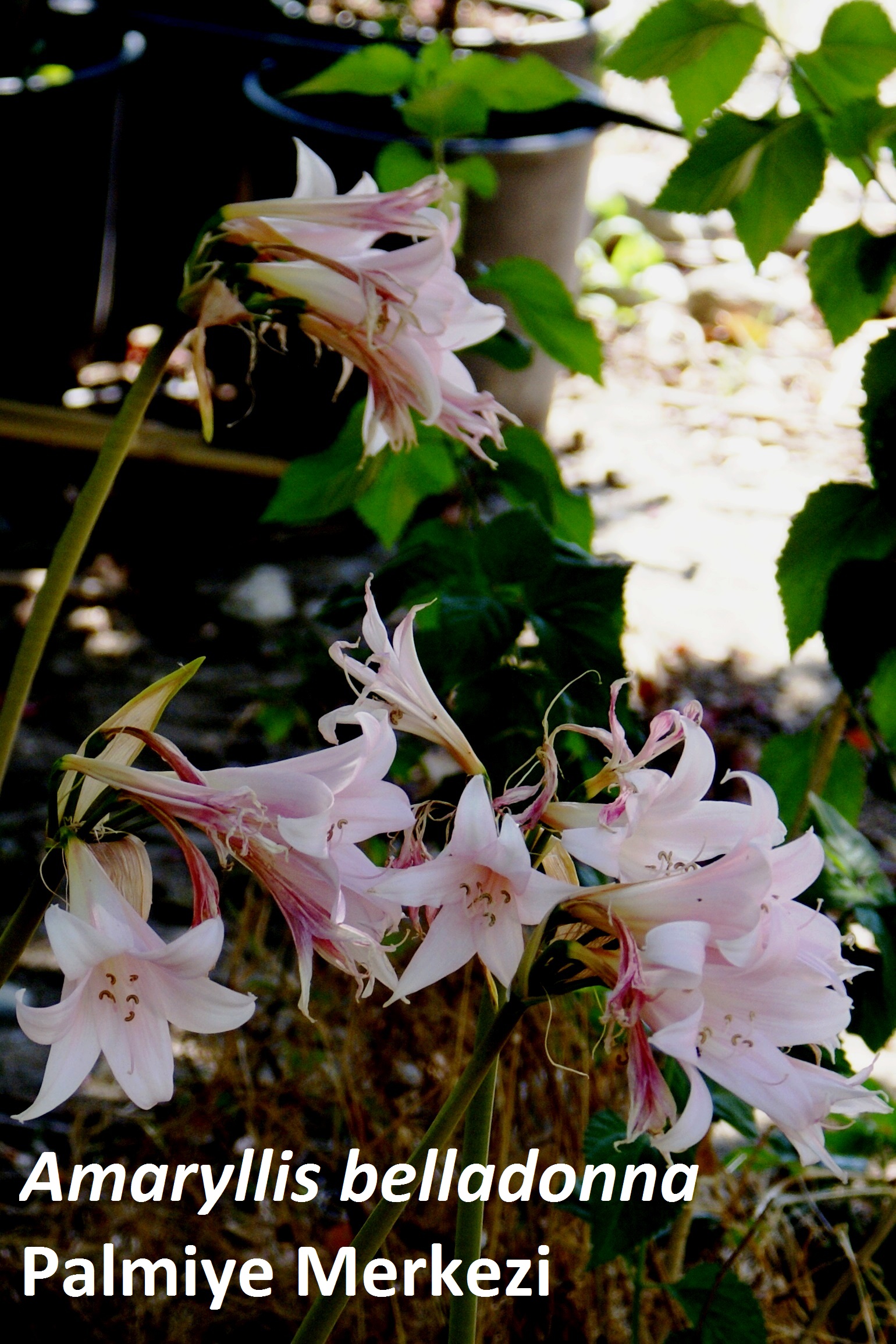 Amaryllis belladonna
is a
bulbous plant, each bulb can
be reached 5–10 cm in diameter. It has several
strap-shaped, green
leaves, 30–50 cm long and
2–3 cm broad. The leaves of
the Belladonna Lily are appearing in the autumn
and die down by late spring. The bulb is then dormant
until late summer. By this time, the bulb produces one
or two, 40–60 cm tall
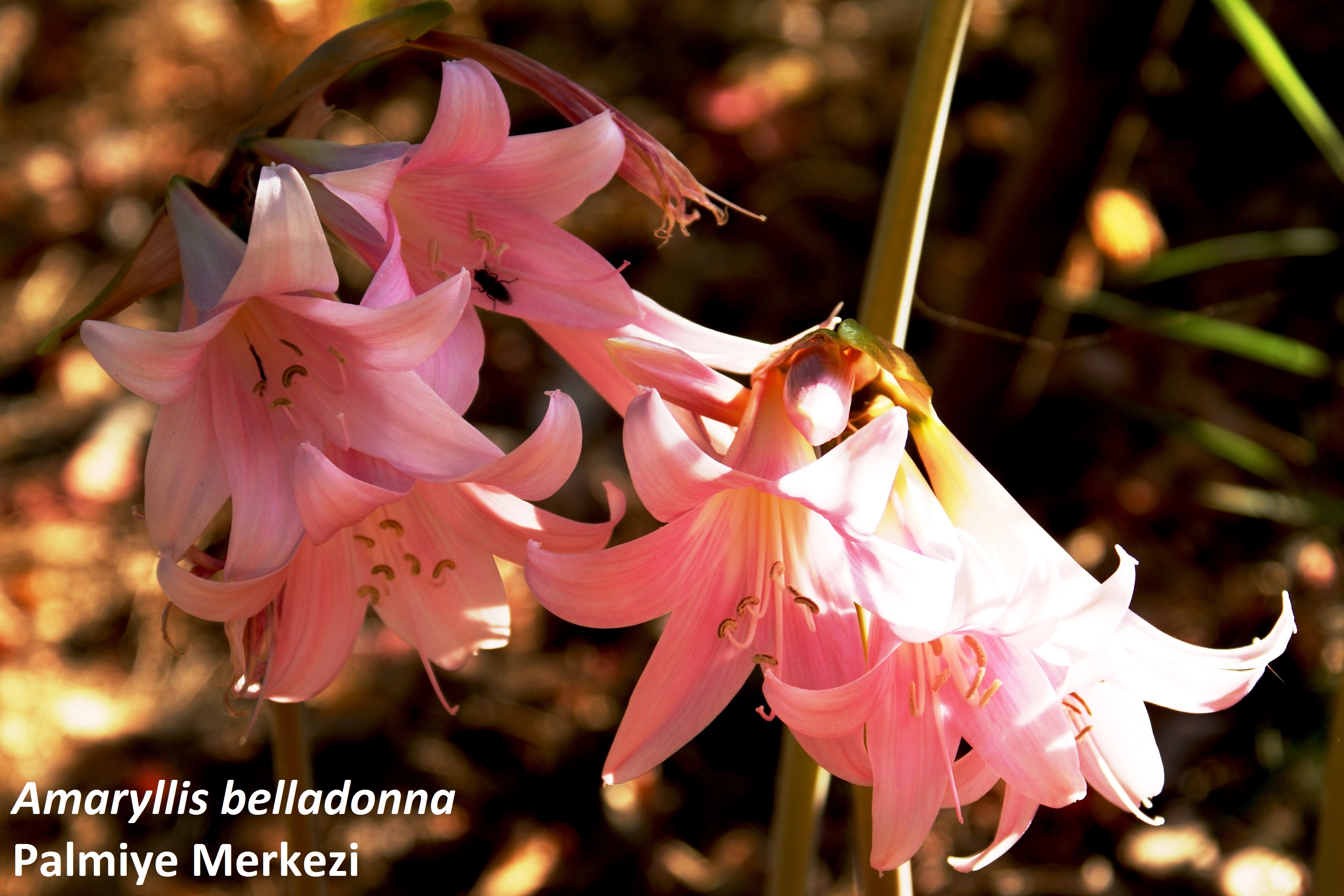
naked stems, each of which bear a cluster of 2-12
trumpet-shaped, fragrant white, pink or purple flowers.
The plant is quite frost
resistant, the bulbs under the soil withstand
-20 ˚C. Amaryllis belladonna
is a
bulbous plant, each bulb can
be reached 5–10 cm in diameter. It has several
strap-shaped, green
leaves, 30–50 cm long and
2–3 cm broad. The leaves of
the Belladonna Lily are appearing in the autumn
and die down by late spring. The bulb is then dormant
until late summer. By this time, the bulb produces one
or two, 40–60 cm tall
naked stems, each of which bear a cluster of 2-12
trumpet-shaped, fragrant white, pink or purple flowers.
The plant is quite frost
resistant, the bulbs under the soil withstand
-20 ˚C.
Amaryllis belladonna
can also tolerate dry conditions, they are highly
tolerant of drought and require little watering. Large
clumps of bulbs can be divided from the mother bulb
during dormant period.
 It
reproduces by bulb division or seeds.
Belladonna Lily
was introduced into cultivation
at the beginning of the eighteenth century. There is an
Amaryllis belladonna hybrid which was bred
in the 1800s in Australia. It is not known the exact
species it was crossed with to produce color variations
of white, cream, peach, magenta and nearly red hues. The
hybrids were crossed back onto the original
Belladonna Lily
and with each other to produce
naturally seed-bearing crosses that come in a very wide
range of flower sizes, shapes, stem heights and
intensities of pink. It
reproduces by bulb division or seeds.
Belladonna Lily
was introduced into cultivation
at the beginning of the eighteenth century. There is an
Amaryllis belladonna hybrid which was bred
in the 1800s in Australia. It is not known the exact
species it was crossed with to produce color variations
of white, cream, peach, magenta and nearly red hues. The
hybrids were crossed back onto the original
Belladonna Lily
and with each other to produce
naturally seed-bearing crosses that come in a very wide
range of flower sizes, shapes, stem heights and
intensities of pink.
Use in Landscape:
In its natural habitat,
Amaryllis belladonna is found in dense groups
among rocks. Therefore, the best place to plant them
would be in a rock garden. They can be grown between a
ground cover or mixed border. Belladonna Lily can
also be grown in large containers.
|
|
|
Palm Centre – Plant of the
Month JUNE 2015
|
|
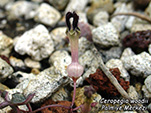
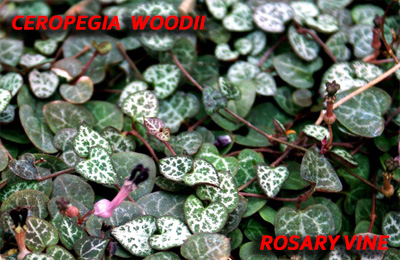
Genus Ceropegia that produces over 200 species of vining or shrub plants in tropical and subtropical regions of Africa. They can be evergreen or semi-evergreen, erect, climbing to trailing, usually succulent, perennials with opposite leaves. They have curiously shaped flowers in summer, sometimes followed by cylindrical fruits containing silky tufted seeds.
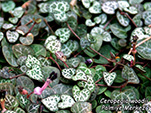
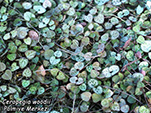
Ceropegia woodii is an evergreen succulent in the genus Ceropegia (Apocynaceae), native to South Africa and Zimbabwe. Its natural habitat may stretch as far north as Tanzania on mainland Africa and as far west in the Atlantic Ocean as the Canary Islands. The plant is also found in Madagascar. It is sometimes treated as a subspecies of the related Ceropegia linearis, as C. linearis subsp. woodii. Common names include Chain of Hearts, Rosary Vine, Hearts on a String.
The genus name Ceropegia, was given by Linneaus to describe his interpretation of the appearance of the flowers as fountains of wax, from the words keros, meaning wax, and pege meaning fountain. The species name honors John Medley Wood, who collected native African plants. Chain of Hearts is a caudiciform plant, having a swollen basal stem or root for water storage. It develops a woody caudex at its base as it matures. It is an evergreen tuberous perennial with long trailing stems to 1 m or more. Opposite heart shaped, leaves are 1-2 cm wide and long. Superficially resemble cyclamen leaves in shape and coloring, silver mottling on top, and green or purple undersides purple beneath.
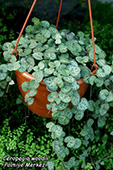 Ceropegia woodii bloom primarily in the summer and fall, but flowers may appear sporadically at odd times throughout the year. Lantern shaped pink and purple tubular flowers 2 cm long. Its flowers can capture insects but these are not carnivorous plants. The five purple petals are fused at the tips, forming a cage-like canopy so the blossoms resemble a small inverted pink vase. Ceropegia woodii bloom primarily in the summer and fall, but flowers may appear sporadically at odd times throughout the year. Lantern shaped pink and purple tubular flowers 2 cm long. Its flowers can capture insects but these are not carnivorous plants. The five purple petals are fused at the tips, forming a cage-like canopy so the blossoms resemble a small inverted pink vase.
Chain of Hearts thrives in a well-drained sandy soil. It must dry out completely in between watering, as it will rot if over watered. It is dormant in winter and may droop. But take care not to add fertiliser at this point as it could also cause the plant to rot. Fertilize infrequently with half strength houseplant fertilizer when actively growing. It has few pests, but mealy bugs can be a problem. Ceropegia woodii is easily propagated from cuttings, from tubers produced at the base of the leaves or by seed.
Use in Landscape: Chain of Hearts is tender, in temperate regions it is a very popular houseplant, often grown in hanging baskets so the long trailing branches can hang down with their leaves spaced out like a row of large beads. But the stems can also be trained up a small trellis or topiary frame. Ceropegia woodii can be grown outdoors only in subtropical and tropical areas, with a minimum temperature of 10 °C. Partial shading is useful when the plant is grown outdoors. As it is drought tolerant, suitable for xeriscaping.
|
| |
|
Palm Centre – Plant of the
Month may 2015 |
|
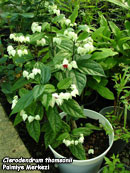
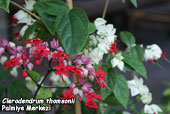
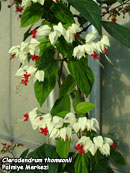
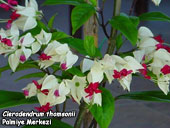
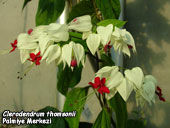
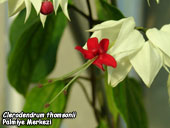
Clerodendrum
is belong to Verbenaceae family. It is a genus
of about 400 species of deciduous and evergreen trees,
shrubs, and climbers mainly found in woodlands in tropical
and subtropical regions, particularly in Africa and Asia.
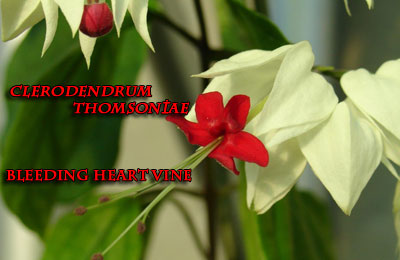
Clerodendrum thomsoniae
is
a
species of
flowering plant
in the
genus
Clerodendrum.
Native to tropical West Africa, from Cameroon west to
Senegal. It was named for William C. Thompson, who was a
physician and missionary to Nigeria. This plant was very
popular during the mid 19th century under the name "Beauty
Bush". It is grown as an
ornamental plant
for its decorative two-coloured flowers. In
temperate areas it
requires shelter and a frost-free environment.
Bleeding Heart Vine is an
evergreen
liana
growing up to 5 m tall, climbing without tendrils, suckers
or root hairs, but rather by twining through and around its
support. It has ovate to oblong
leaves
8–12 cm long. The plant drops some of it leaves in winter.
Blooms mostly from April to November in natural conditions
of tropical climate. Also has few flowers even during the
winter time. The
flowers
are produced in
cymes of 8-20 together, each
flower with a pure white to pale purple five lobed
sepal
2,5 cm in diameter, and a crimson red five lobed
corolla
1,5 cm long and in diameter.
Clerodendrum
thomsoniae
grows best with rich, sandy soil that is kept moist. It is a
heavy feeder and it is advised to use a fertilizer that
contains calcium for best results. If grown indoors, a
winter rest period is advised. Fort this, it should move to
a cooler area, cut back on water and fertilizer until
spring. It can be pruned closely in late winter or early
spring, as it blooms on the new season's growth.
Bleeding Heart Vine
is a thirsty plant, a mature plant may require several
litters of water a week during active growth. Happiest in
bright light, may be grown in partial shade.
Best results occur with morning sun and afternoon shade.
The showy white sepals with dark red corolla make this plant
a show stopper. Needs some type of support to grow on.
Clerodendrum thomsoniae
can be increase by replanting suckers or rooting semi-ripe
tip cuttings. Quickest results can be obtained from root
cuttings taken in winter.
Use in Landscape:
Outside the tropics, Bleeding Heart Vine is usually
grown in containers so it can be protected when temperatures
fall below 4 °C. It can be kept pruned into a shrub, or
given support and allowed to scramble like a vine. This vine
like shrub does not spread as much as some, and is thus a
good choice for a restricted support like a doorway arch or
container trellis. Actually it is not such a good candidate
to cover a fence or arbor. Clerodendrum thomsoniae
is among the world's most beautiful flowers. |
|
Palm Centre – Plant of the
Month april
2015 |
|
Yuccas
are belong to Asparagaceae family (formerly Agavaceae). They
can be evergreen perennials, shrubs or trees, with dense or
loose rosettes of stiff, sword-shaped leaves and tall
panicles of bell-shaped flowers. There are about 40 species
and 30 subspecies of yucca, all of them are belong to New
World. Although they live in tropics and subtropics, many of
them are very hardy and some withstand -30°C.
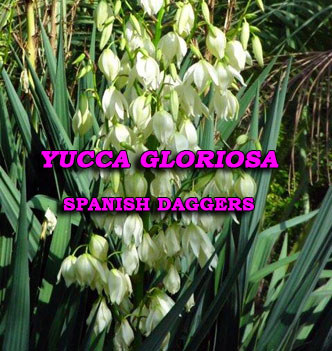
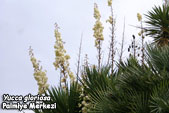
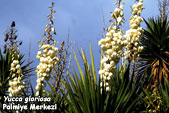
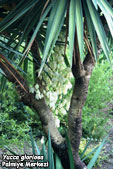
Yucca gloriosa
is a
species
of
yuccas
in the
family
Asparagaceae. It is
native
to subtropical southeastern USA from the
Outer
Banks
of
Virginia
and
North
Carolina
to
Florida
and
Alabama.
Yucca gloriosa grows on
sand
dunes
along the often together with
Yucca aloifolia
and a variety called Y. gloriosa var. tristis.
In contrast to Y. gloriosa, Tristis varieties leaves
are softer, recurvated and wider than usual gloriosa.
Soft Tipped Yucca
is an
evergreen
shrub.
The plant is known to grow to height 4 meters. It is
caulescent, usually with several stems arising from the
base, the base thickening in adult specimens. The long
narrow leaves are straight and very stiff, growing to
30–50 cm long and 3-4 cm wide. They are dark green with
entire margins, smooth, rarely finely denticulate,
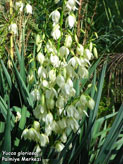
acuminate, with a sharp brown terminal spine. Inflorescence
is a panicle up to 250 cm long, of bell-shaped white
flowers, sometimes tinged purple or red. Fruit is a
leathery, elongate berry up to 8 cm long.
Yucca gloriosa
is widely cultivated in warm
temperate
and
subtropical
climates, and valued as an architectural focal point. In a
domestic environment, the plant has average water
requirements, and little maintenance is needed other than
the removal of dead leaves when the shrub nears its ultimate
height. The plant is very hardy, without leaf damage at
-20 °C. but is subject to injury and decay by winter damp
and snow.
Leaf ends are less sharp
than those of the similar
Yucca aloifolia.
Soft Tipped Yucca
thrives in sandy, well-drained soil, in heat,
full sun, also withstand in shade. Propagation is done by
seeds, clump divisions or stem cuttings. Established plants
are very drought resistant. The plant tolerates maritime
exposure as well. Plants do not flower every year, requiring
hot summers to initiate flowering. The flowers are produced
in the autumn contrast to most of the yuccas which they
flower in spring. The scent of the flowers is most
pronounced at night. In the plants native environment, its
flowers can only be pollinated by a certain species of moth.
This moth cannot live in Turkiye and, if fruit and seed is
required, hand pollination is necessary.
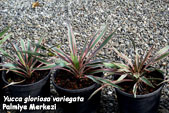
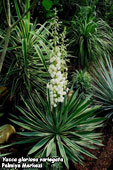
A range of selected cultivars are available in the
horticultural trade, including forms with variegated leaves,
Yucca gloriosa variegata is one of the
well known.
Yucca gloriosa
has been known to cause skin irritation and even
allergic
reactions
upon contact. The leaf points are also sharp enough to break
the skin.
Use in landscape:
Excellent for xeriscaping. Grown as architectural specimens
in a border or courtyard, or in containers. Can be used as
accent plant, tropical effect containers and large planters.
It is one of the popular yuccas, often used as a
houseplant, valued for its relatively smooth soft leaves.
|
|
Palm Centre – Plant of the
Month march
2015 |
|
Yuccas
are belong to Asparagaceae family (formerly Agavaceae).
They can be evergreen perennials, shrubs or trees, with
dense or loose rosettes of stiff, sword-shaped leaves
and tall panicles of bell-shaped flowers. There are
about 40 species and 30 subspecies of yucca, all of them
are belong to New World. Although they live in tropics
and subtropics, many of them are very hardy and some
withstand -30°C.
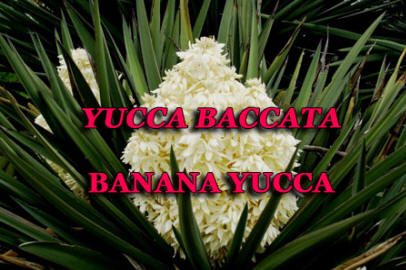
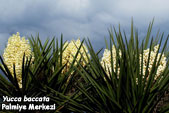
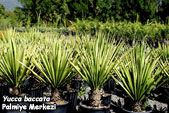
Yucca baccata is
belong to
Asparagus Family
“Asparagaceae”
generally described as a perennial shrub.
Datil Yucca
is a common species of yucca, native to the
deserts
of the
southwestern United States
(California,
Nevada, Arizona, Colorado, New Mexico, Texas, Utah) and
northwestern Mexico. It is also seen in the wild in
Colombia.
Yuck-ka
is a Caribbean name for the cassava plant, which
originally was named Yucca gloriosa. The specific
epithet "baccata" means "fruited," refering to
the plant’s large fruits. Yucca Baccata is also
called Banana Yucca, gets its common name from
its banana shaped large
fruits.
In wet years, when many yuccas bloom over the landscape,
they resemble large snowy-white candles, so the plants
also be called "Our Lord's Candles" as well.
Yucca baccata
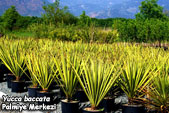
is recognized by having 40–100 cm long, 3-5 cm wide,
grey-green
leaves
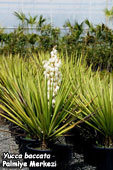
and short or non existent trunks. It flowers in the
spring, starting in March to July.
Leaves are retained year to year. The
Banana Yucca
has a short life span relative to most other plant
species and a moderate growth rate. At maturity, the
typical plant will reach up to 150-200 cm high, and
500cm wide.
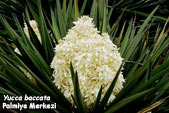
Yucca baccata
has very short stems, which may occur singly or clumped
together. Leaves are arranged spirally at the base of
the stem. Individual white fibers along the leaf margins
tend to curl. The flower stalk is 80–120 cm high, rise
above the leaves. Bell-shaped flowers, which grow in
thick clusters during the spring, are creamy white in
color. Each flower has six perianth segments and three
stigmas on a stout pistil. The fruits are large, 10-20
cm long, and fleshy at maturity. The pods contain flat,
blackish seeds.
Banana Yucca
is hardy to -29°C, likes full sun to light shade, it is
very tolerant to neglect, does not need much water.
Propagation is done by seeds or dividing offsets.
The native American’s at Southwest USA
utilized the Banana Yucca for food. The fleshy fruits
were eaten green or dried and stored for winter
consumption. The young flower stalks were also eaten,
like asparagus. From the yucca leaf came fibers to make
cordage. These were used for belts, rope ladders,
fishnets, mats, sandal, clothing and baskets. The
saponin-rich roots create a soap like lather which can
be used in cleaning.
The nocturnal yucca, or pronuba moth has a special
relationship with the yucca, so special, in fact, that
there is a specific pollinating moth species for each
yucca species. The moth rolls pollen into a small ball
and transfers it from plant to plant. While pollinating
the flower, the female lays her eggs in the plant's
ovary.
Landscape Usage:
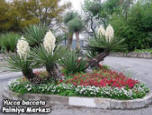
Low clumping accent plant in well draining soil, full or
part shade. Specially used in rock gardens, and dry
gardens. |
|
Palm Centre – Plant of the
Month FEBRUARY
2015 |
|
|
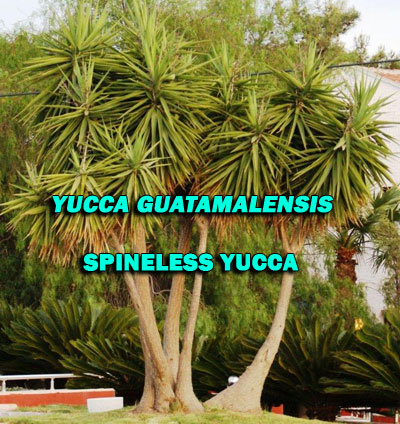
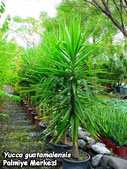
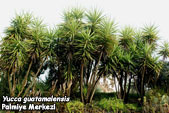
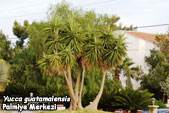
Yucca guatemalensis
is
a
Yucca
species that is native to eastern part of
Mexico
and
Belize,
Costa Rica,
El Salvador,
Guatemala,
Honduras,
Nicaragua.
It lacks spines at end of the leaves, typical of most yuccas hence
the common name
Spineless Yucca.
With age the trunk becomes rough and thick, and when mature, it
develops a swollen base and often new stems from the base at ground
level. Swollen base looks like an elephant’s foot, so plant is also
called Elephant Foot Yucca.
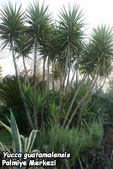 Yucca
guatemalensis
can grow up to 8-10 m in height, with a spread to 5 m. It normally
have a thick, single trunk or be multi trunked resulting from a
thickened, trunk-like lower base. Sometimes after blooming 2-3
branch forms at near the top and makes a nice umbrella shape. The
leaves are strap-like, shiny green, to 1 m long and about 7 cm wide,
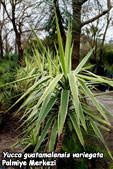
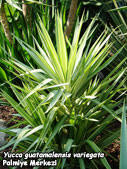
spineless with serrated margins. The selection, 'Variegata' has
leaves with creamy yellow margins. Like other yuccas, this one has
white bell shaped flowers borne on tall stalks above the foliage in
summer. After white flowers are produced in summer, followed by
brown, fleshy fruits which are oval and up to 2,5 cm long. The
flower petals are edible. Yucca
guatemalensis
can grow up to 8-10 m in height, with a spread to 5 m. It normally
have a thick, single trunk or be multi trunked resulting from a
thickened, trunk-like lower base. Sometimes after blooming 2-3
branch forms at near the top and makes a nice umbrella shape. The
leaves are strap-like, shiny green, to 1 m long and about 7 cm wide,
spineless with serrated margins. The selection, 'Variegata' has
leaves with creamy yellow margins. Like other yuccas, this one has
white bell shaped flowers borne on tall stalks above the foliage in
summer. After white flowers are produced in summer, followed by
brown, fleshy fruits which are oval and up to 2,5 cm long. The
flower petals are edible.
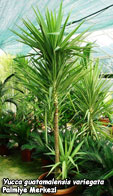 Spineless
Yucca
can be grown in a variety of soils and is drought-tolerant. Young
plants are occasionally used as
houseplants.
It is moderately tolerant of salt spray and salty soils. Also
tolerates full sun to shade. Plants are subject to
root rot
if overwatered.
Leaf spot
may affect the appearance of the leaves, but it does not affect the
health of the plant. Propagation is by
suckers,
cuttings
or
seed.
Yucca guatemalensis
'Silver Star',
Yucca guatemalensis
‘Jevel' are well known
variegated
forms of
Spineless Yucca. Spineless
Yucca
can be grown in a variety of soils and is drought-tolerant. Young
plants are occasionally used as
houseplants.
It is moderately tolerant of salt spray and salty soils. Also
tolerates full sun to shade. Plants are subject to
root rot
if overwatered.
Leaf spot
may affect the appearance of the leaves, but it does not affect the
health of the plant. Propagation is by
suckers,
cuttings
or
seed.
Yucca guatemalensis
'Silver Star',
Yucca guatemalensis
‘Jevel' are well known
variegated
forms of
Spineless Yucca.
Landscape Use:
Yucca guatemalensis is one of the tallest of the
yuccas, and is often used as a framing specimen at the side of a
building or along a walkway. It makes a striking presence in large
landscapes, but may be too much for a small yard. Since they lack
the sharp spines of other yuccas, Spineless Yucca’s are
harmless and can be used where most others cannot. They are grown in
containers and sometimes seen in indoor malls. This handsome
tropical looking yucca can be used as an accent in a gravelly
succulent garden, but realize it will get large. |
|
Palm Centre – Plant of the
Month JANUARY
2015 |
|
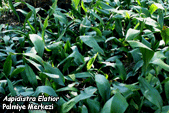
There are about thirty species and variety of
Genus
Aspidistra
belong to, family
Liliaceae.
These plants are slow growing, evergreen, rhizomatous, perennial
herbs native to East Asia. They have simple leaves with smooth
margins and parallel veins.
The
well known species is
Aspidistra elatior.
It is native to Taiwan and islands in southern Japan. The specific
epithet elatior
is derived from
elat
meaning exalted, lofty, high and
ior
meaning more so, to a greater degree.
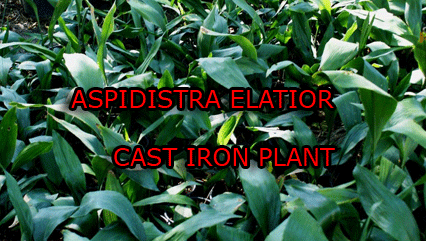
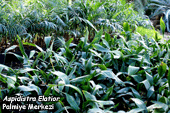
Aspidistra elatior
is well known in cultivation and has a reputation for withstanding
neglect, giving rise to its common name of Cast Iron Plant.
It is tolerant of low light, low humidity, temperature fluctuation
and irregular watering. It is best situated in a position away from
direct sun to avoid leaf bleaching. Good drainage is also required
for optimal growth and to avoid root rot.
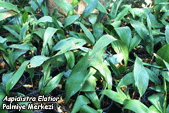
Aspidistra elatior
is a perennial which grows in wild up to 60 cm height and width.
Originally it is a forest plant, has dark green, leathery leaves
40-60 cm long including petiole (leaf stalk) and 13 cm wide, which
rise from a creeping rhizomatous rootstock, lying half buried in the
potting mixture. The long, lance shaped, glossy, dark green leaves
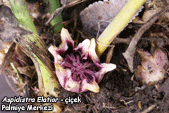
grow directly from a number of short stalks. 8 lobed cream flowers
with maroon colouring on the inner surface, borne in early summer at
soil level, but these are often hidden by the foliage.
Cast Iron Plant
widely grown as a house plant. It can also be grown successfully
outdoors in shade in temperate climates, where plants will generally
cope with temperatures down to -5 °C. It is preferred for its
durability and ability to survive under adverse conditions: low
light, high heat, poor soil, and drought.
Aspidistra elatior
is
tolerant of a wide range of soils and potting media as long as they
are well-drained. Once established,
it is
tolerant of droughty conditions but prosper under evenly moist
conditions. It is moderately salt tolerant.
Cast Iron Plants
appear to transplant well starting from almost any size including
single rhizome nodes. Although they may be kept in dark corners and
other poorly lit positions, they will produce little growth there,
whereas they thrive in medium light for instance, at a sunless
window.
Aspidistra elatior
propagate by dividing overcrowded clumps in the spring. Each piece
of rhizome should carry at least two leaves and several pieces may
be planted together in a pot.
Leaves
of the
Cast Iron Plant
are reportedly non-toxic and extremely long-lasting. They make good
linear materials in floral arrangements. For cut foliage use,
Aspidistra elatior
leaves are harvested with clippers and are frequently
bundled ten per bunch. Vase life is very long, stems of Aspidistra
will last in arrangements for a month or longer.
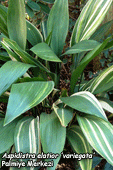
There are some cultivars. Well known one is A. elatior
'variegata'
has
similarly sized leaves that are irregularly marked with light green
and white streaks.
Landscape Use:
Cast Iron Plants
are commonly used as ground covers in shade gardens since they can
tolerate light to very heavy shade.
They
cannot tolerate full sunlight but can tolerate drought and
competition from tree roots.
Aspidistra elatior
can also be used as accent, edging, or container plants. Old leaves
will need to be pruned out periodically. Initial spacings for
landscape plantings are 30-50 cm. |

Back to
Top
|
|